Projects
Solvable Sokoban Without a Solver via Diffusion
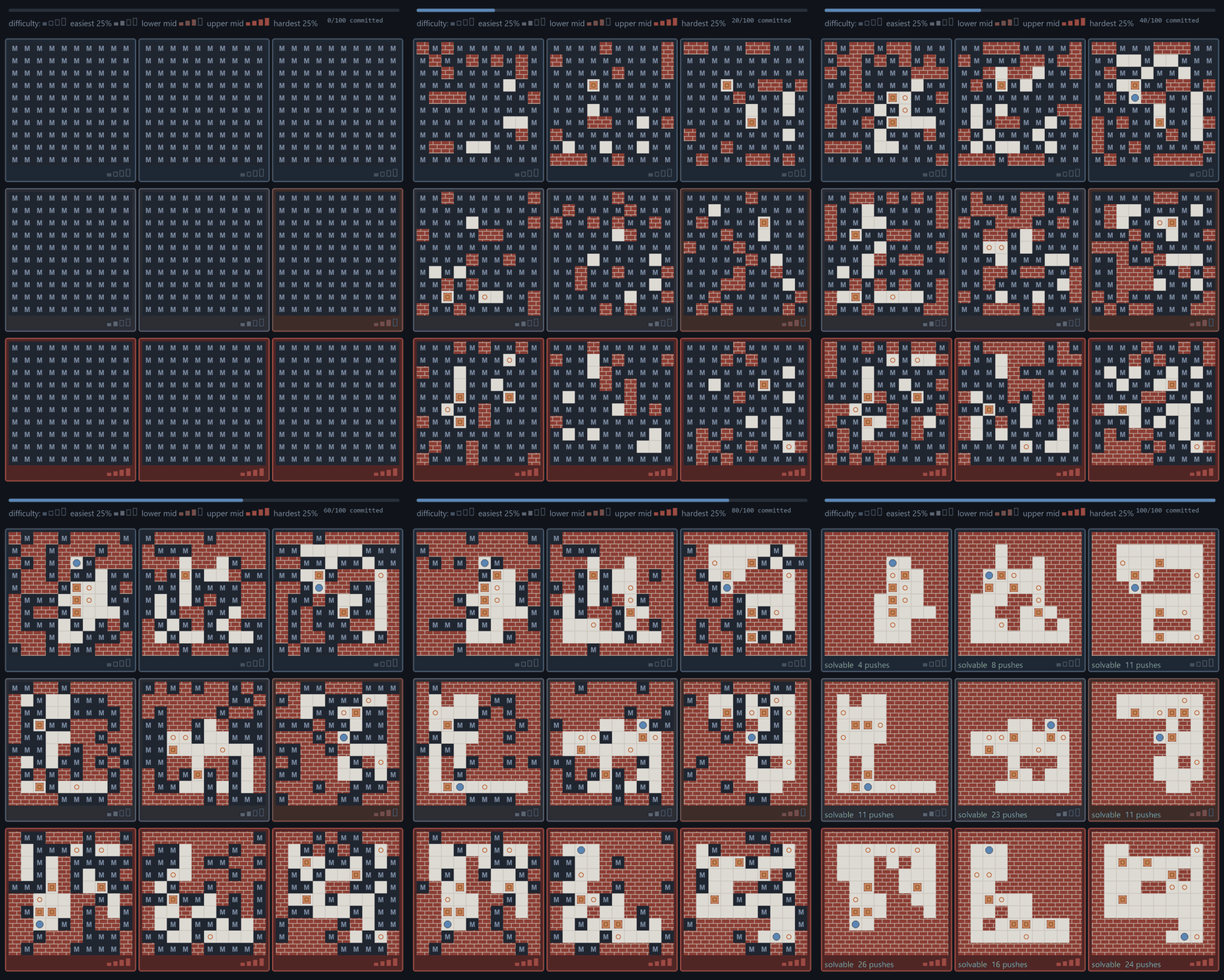
Sokoban is a single-player puzzle in which a worker pushes boxes onto goal squares, and deciding whether a given puzzle can be solved at all is PSPACE-complete.
This project trains a 4.9M-parameter masked discrete diffusion model to generate Sokoban puzzles from scratch, using nothing but a per-cell tile-completion objective: no solver, no reward, and no solvability label ever enters training. Despite never being shown whether a puzzle is playable, the model produces puzzles that are 77.4% solvable unfiltered, rising to 98.7% once failures repairable by deleting a single wall are counted.
Solving Pasur Using GPU-Accelerated Counterfactual Regret Minimization
Pasur is a fishing card game played over six rounds, similar to games such as Cassino, Scopa, and Bastra. This paper introduces a CUDA-accelerated computational framework for simulating Pasur, emphasizing efficient memory management. We use our framework to compute near-Nash equilibria via Counterfactual Regret Minimization (CFR), a well-known algorithm for solving large imperfect-information games.
Generative Modeling of Heston Volatility Surfaces Using Variational Autoencoders
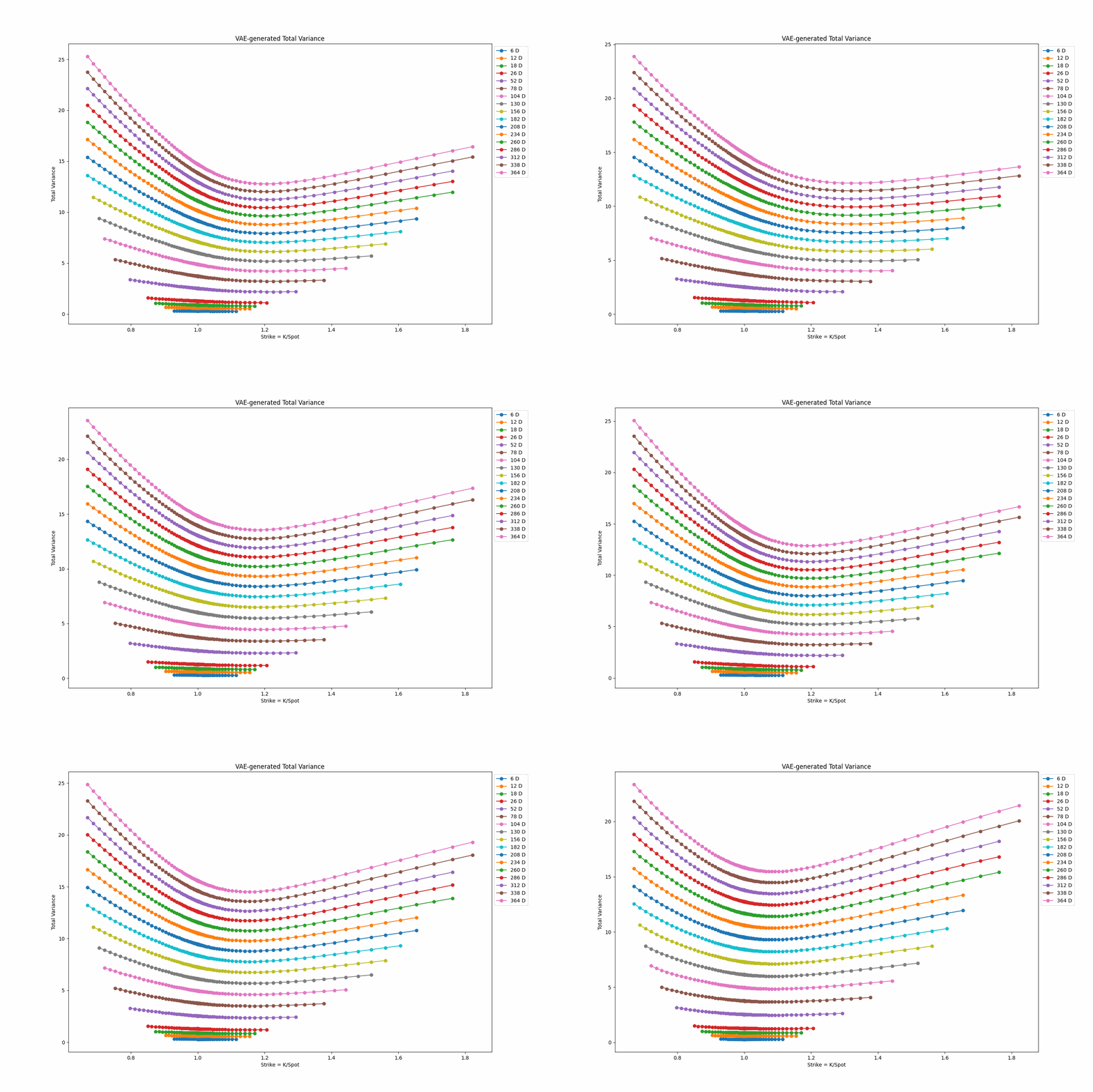
This project trains a Variational Autoencoder (VAE) to produce Heston volatility surfaces. The Heston model is a stochastic volatility model used in option pricing. Once trained, the VAE can generate new volatility surfaces, which is useful for financial applications such as pricing exotic derivatives.
Implementing Deep Smoothing for Implied Volatility Surfaces
This project is a Python implementation of the methods in the paper Deep Smoothing of the Implied Volatility Surface, with the neural network training, convergence behavior, and implementation details developed independently.
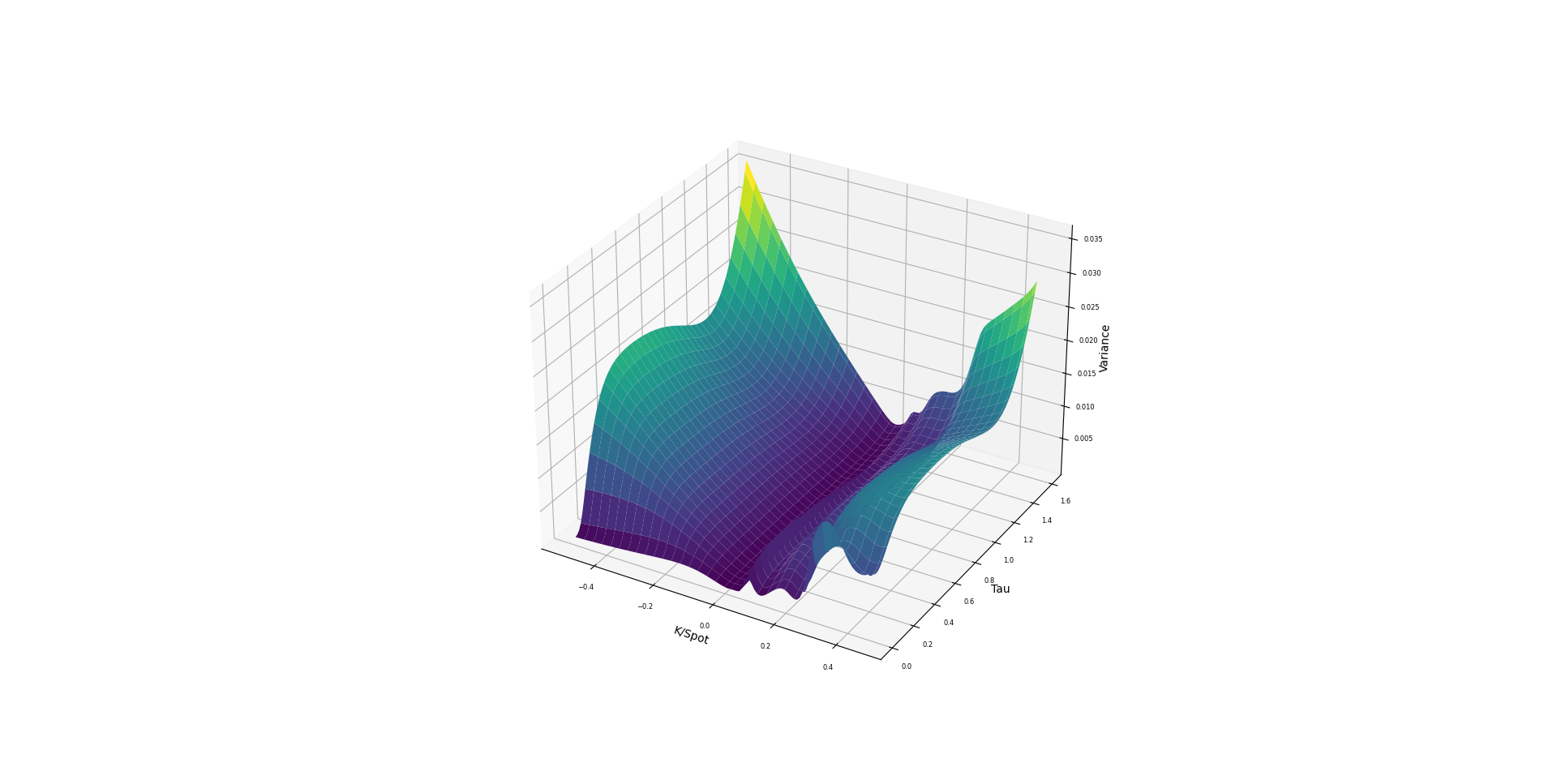
A volatility surface represents implied volatility across strike prices and maturities and is crucial for pricing and hedging options accurately. The surface must be arbitrage-free; otherwise it implies riskless profit opportunities and the model is unreliable in real markets. Deep smoothing uses deep learning to generate smooth, arbitrage-free implied volatility surfaces. Given a set of market points \((k, \tau, iv)\) that lie on a 3D surface, we construct the surface with two objectives:
- Fit the market data.
- Satisfy certain curvature properties. In quantitative finance this means the surface is arbitrage-free; mathematically, it means minimizing a specified loss function over the whole surface.
Quantitative Finance and Option Pricing
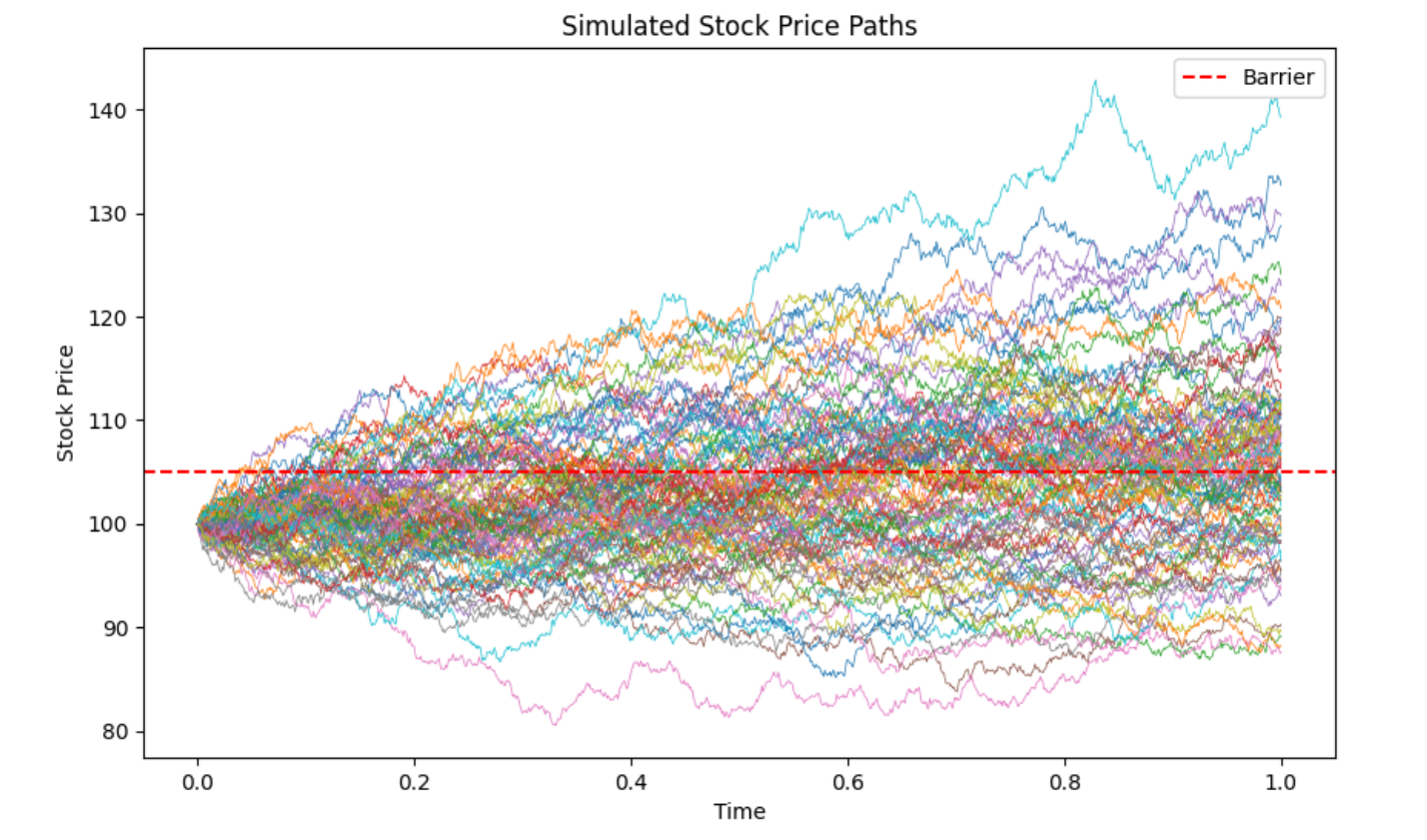
Once upon a time, I became interested in quantitative finance, in particular option pricing. Option pricing uses stochastic models in which the uncertainty is driven by a class of continuous-time martingales known as Wiener processes. The classic source for learning how options are priced is Shreve’s Stochastic Calculus for Finance II. I typed up my own solutions to all of the book’s exercises.
A Termination Criterion for Stochastic Gradient Descent for Binary Classification
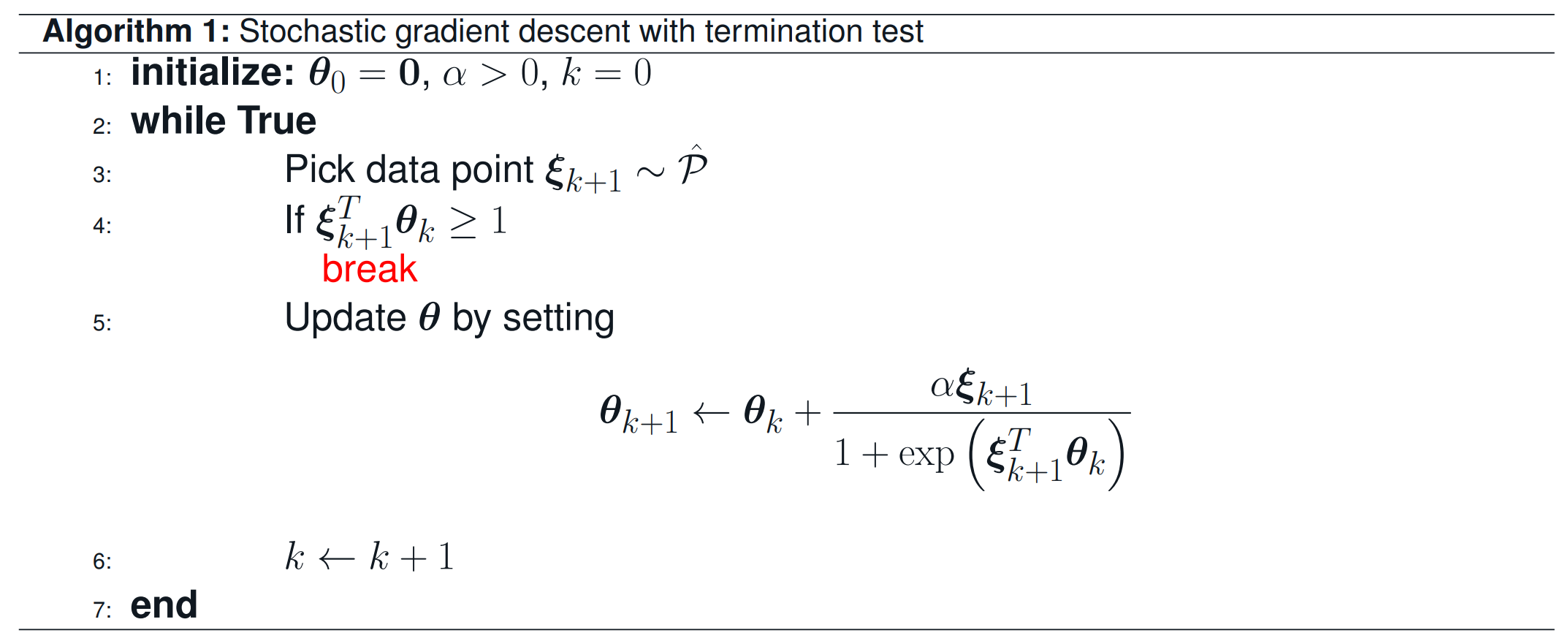
Early stopping rules and termination criteria play a central role in machine learning. Models trained with first-order methods without early stopping may predict poorly on future data because they over-fit the given samples. For my PhD project, I worked on a simple and computationally inexpensive termination criterion that predicts well on unseen data, with theoretical and numerical evidence for its effectiveness. I presented the results at OPT2020 (Workshop on Optimization for Machine Learning at NeurIPS).